I Spent a Month Doing Nothing Fast in Chiang Mai. Here's What Actually Stuck.

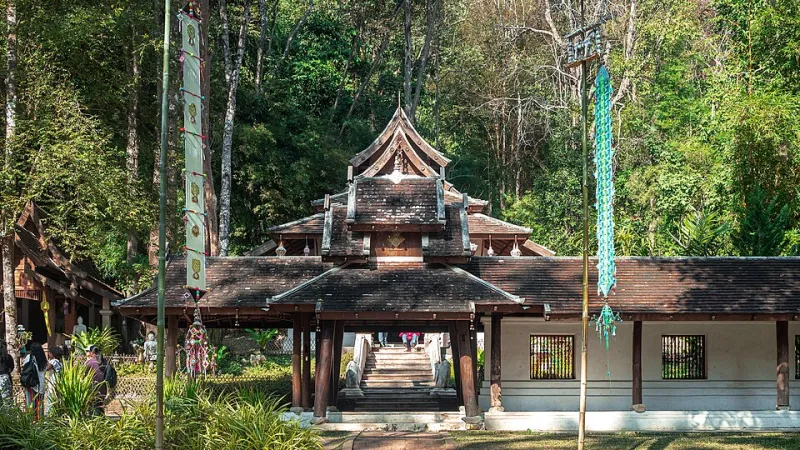
Photo: CEphoto, Uwe Aranas, CC BY-SA 3.0, via Wikimedia Commons
Let's get the cliché out of the way first: yes, I came to Chiang Mai for the cost of living. A furnished one-bedroom in Nimman for less than my old parking spot in Seattle? Sure. Sign me up.
But a funny thing happens around week two, once the novelty of cheap mango sticky rice wears off. You realize the math was never really the point. What you actually came for — whether you knew it or not — was a different relationship with time. Here's what a month of living at Chiang Mai's speed taught me, and what survived the flight home.
The 6 a.m. Thing No One Tells You About
My first morning, I was woken before dawn by chanting drifting up from the temple two streets over. Instead of reaching for my phone, I wandered outside and watched a line of saffron-robed monks walk the neighborhood collecting alms — silent, unhurried, entirely routine for everyone except me.
I'm not going to pretend I became a sunrise person. I didn't. But I started paying attention to how my mornings began, and that turned out to matter more than anything on my to-do list. Back home, that looks like making coffee before opening my laptop. Small, but it changes the whole day's texture.
Nimman Afternoons: Work as a Background Activity
The Nimmanhaemin area is digital-nomad central, and it'd be easy to be cynical about it — every third café has someone on a Zoom call. But something about the café culture here softened my relationship with work. Order a latte for the price of a vending machine soda, settle into a corner seat, and the Wi-Fi hums along while the afternoon does its thing.
I stopped measuring productivity in hours logged and started noticing something stranger: I got more done in four focused hours here than in eight scattered ones back home. Turns out the pressure I associated with work was partly self-inflicted, partly ambient, and entirely optional.
The Moat Walk: My Favorite Free Therapy
Every evening around 5:30, I'd walk the Old City moat as the light went amber behind the old walls. Ten minutes one way, twenty the other, depending on my mood. Families fed the fish. Kids sold paper lanterns. Nobody was in a hurry, including me.
I used to think walks were what you did when you had nothing better to do. Now I think they're what you do to remember you exist outside of your inbox. In the US, I've replaced the moat with a loop around my neighborhood — different scenery, same effect.
What Actually Translates Back Home
Here's the honest part: you can't bottle Chiang Mai. Rent goes back up. The lattes cost $6 again. But a few things stuck:
- Mornings set the tone. Guard the first hour. It's the cheapest luxury you own.
- Work in blocks, not marathons. Four real hours beats eight pretend ones.
- Walk somewhere every day with no destination. Non-negotiable now.
- Eat like it's an event. Street food culture here treats meals as social time, not fuel stops.
The Takeaway
The digital-nomad fantasy sells you a location — a beach, a café, a laptop by a pool. What Chiang Mai actually offers is a pace. And pace, it turns out, is portable. You just have to decide, on an ordinary Tuesday back home, to keep walking the moat.