The Haze Nobody Warns You About: An Honest Guide to Chiang Mai's Burning Season
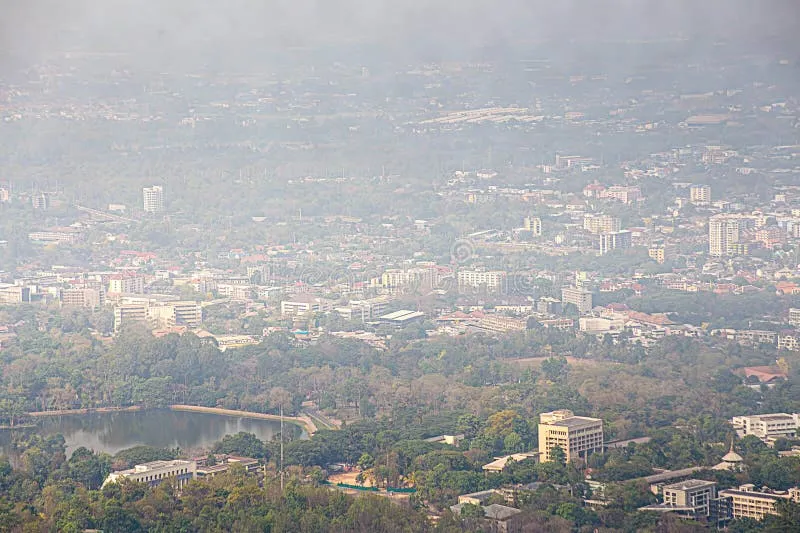
Photo: Chiang Mai smoky haze burning season city skyline mountains, via thumbs.dreamstime.com
Here's the thing nobody puts on their Instagram: from about mid-February through early April, Chiang Mai gets smoky. Not a little misty, not atmospheric-mountain-fog smoky — genuinely hazy, eyes-stinging, sky-the-color-of-dirty-felt smoky. It's called burning season, or the 'smoky season' if you want to be polite about it, and it happens every single year.
And yet? Scroll through the average US travel blog's 'Best Time to Visit Chiang Mai' listicle and you'll find a bullet point about it at best. If you're booking a spring break trip or using saved-up PTO for that March escape, you deserve a straight answer before you hit purchase. So here it is.
What's Actually Happening in the Air
The short version: farmers across northern Thailand (and across borders in Myanmar and Laos) burn crop residue after harvest, because it's fast and cheap. Add Chiang Mai's bowl-shaped geography — mountains on every side, little wind — and all that smoke just sits over the city like a lid on a pot.
You'll see the term PM2.5 thrown around. That's fine particulate matter small enough to lodge deep in your lungs, and during peak burning season, Chiang Mai's readings regularly spike into 'unhealthy' and occasionally 'very unhealthy' territory on the AQI scale — numbers worse than the bad-air days that make headlines in Los Angeles or Phoenix. Apps like IQAir or AirVisual will become your daily check, the way you'd check the weather back home.
Is a two-week visit going to ruin your lungs? Probably not, if you're generally healthy. But if you have asthma, heart issues, or you're traveling with kids, you should take this seriously. And even healthy travelers will notice scratchy throats, headaches, and that general 'why does my hotel room smell like a campfire' feeling.
The Week-by-Week Reality
Not all of smoke season is created equal:
- Early-to-mid February: Usually fine. Occasional haze, but most days are still clear and gorgeous. Honestly, this is one of the most underrated windows to visit.
- Late February through March: This is the rough stretch. AQI climbs, the mountains disappear behind the murk, and the sunsets go from spectacular to vaguely apocalyptic.
- Early-to-mid April: It starts breaking up, usually helped along by the first real rains around Songkran (Thai New Year, April 13–15). By late April, the sky is blue again.
If your dates are locked into March — maybe that's when you can actually get away — the trip isn't doomed. But plan it differently than you would in November.
Making a Hazy Trip Actually Good
Chiang Mai's saving grace is that it's not just a mountain-view destination. It's a city of interior worlds — and burning season is when those shine.
Go indoors, on purpose. This is the moment for that full-day Thai cooking class you'd normally wave off (many schools run out of covered, open-air pavilions just outside town), the Lanna Folklife Museum, the Chiang Mai National Museum, and the endless rabbit hole of air-conditioned specialty coffee shops. Honestly, if your travel style leans slow anyway — long lunches, one neighborhood per day, third refill of a Chiang Mai-grown pour-over — the haze barely changes your itinerary.
Temples still work. Doi Suthep's views will be a white-out, so skip the summit and go for the interiors instead: Wat Phra Singh's assembly hall, Wat Chedi Luang at dusk, Wat Umong's tunnel shrines. You're there for the atmosphere, not the panorama.
Mask up like it's 2020. N95-style masks are sold at every pharmacy and 7-Eleven for a few baht. Locals wear them all season; you won't look odd, you'll look prepared.
Chase the air, literally. A whole subculture of nomads treats burning season like a migration. When Chiang Mai's AQI climbs, people decamp to Pai (which, fair warning, often gets the same smoke), or hop a cheap flight to Luang Prabang, Chiang Rai, or down south to Krabi for a week, then circle back when the wind shifts. If you've got flexibility built into your trip, a 'smoke-cation' mid-way through is a genuinely fun pattern — two countries, one flight budget.
Should You Just Book a Different Month?
If you have the choice and you're set on mountain vistas, trekking, and rooftop sunsets: yes, come in November through January, when the air is crisp and the mornings are cool enough for a jacket. That's the postcard version of this city.
But if March is when you can travel — and for a lot of Americans with school-age kids or rigid work calendars, it is — Chiang Mai still delivers. Hotel prices drop. The famous crowds thin out. Cafés are emptier, massage appointments are easier to get, and the city feels more like the place locals actually live. Some of my favorite slow-travel mornings in Chiang Mai happened in March, hazy sky and all, second (masked) coffee in hand.
Just book with your eyes open. Check the AQI history for your dates, pack the masks, plan the indoor days, and save the Doi Inthanon sunrise photos for a clearer trip. Burning season isn't a dealbreaker — it's just the fine print the glossy blogs forgot to include.