Merit, Jasmine Water, and Staying Dry: Chiang Mai's New Year on Your Own Terms
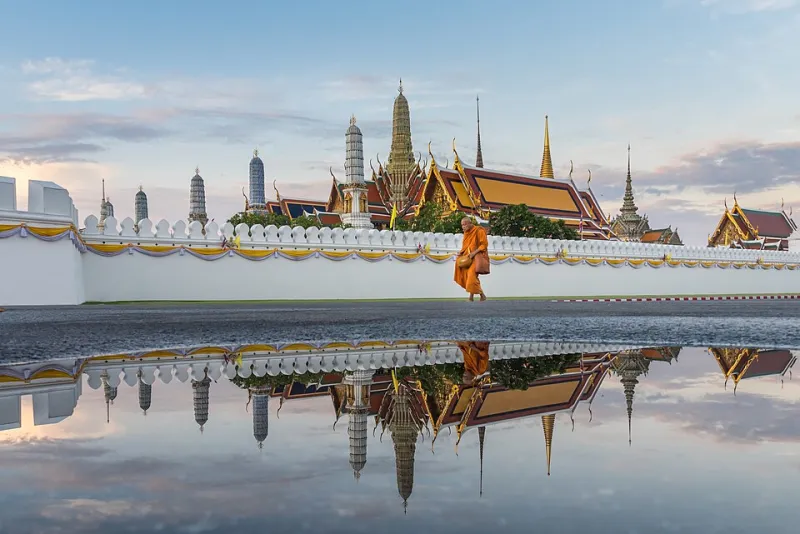
Photo: Nawit science, CC BY-SA 4.0, via Wikimedia Commons
Every April, Chiang Mai gets advertised as the world's biggest water fight, and every April some visitors arrive expecting a party and leave feeling like they missed the point. Both things are true at once. Songkran is a three-day soak and it is a religious holiday, and the second one starts around six in the morning before the buckets come out.
If you would rather stay dry, you are not opting out of the culture. You are choosing the half of it that most people sleep through.
Why Staying Dry Doesn't Make You a Bad Guest
The water is not the holiday. The water is a relatively recent escalation of an old ritual: pouring a little scented water over someone's hands as a blessing. Somewhere along the way, hand-poured became bucket-poured, then ice-water-in-a-pickup-truck. It is fun. It is also not obligatory.
What is obligatory, more or less, is showing up with some respect for what the days actually mark. Songkran is the Thai New Year, April 13 through 15, and in 2026 it lands on Monday through Wednesday. Chiang Mai reliably stretches it. Celebrations here often start a day or two early and the water does not fully stop until the weekend. Plan around that, not around the official dates.
Where the Water Actually Is, So You Can Avoid It
The soaking zone is a ring, not the whole city. The moat roads, especially Tha Phae Gate and the stretch of Moon Muang along the east side of the old city, are the epicenter. Nimmanhaemin gets rowdy. Pickup trucks full of kids patrol Huay Kaew and the roads toward the university. Water flies roughly ten in the morning to six in the evening, peaking on the 13th and 14th.
Outside that ring, things are calmer than first-timers expect. The west side of the moat is quieter. The lanes of Santitham, the neighborhoods around Wat Suan Dok and Wat Jed Yod, and the riverside streets of Wat Ket are largely dry, and people there are going about their holiday. If you book lodging on the west or north side and walk deliberately, you can go three days without a direct hit.
Morning Is the Real Holiday
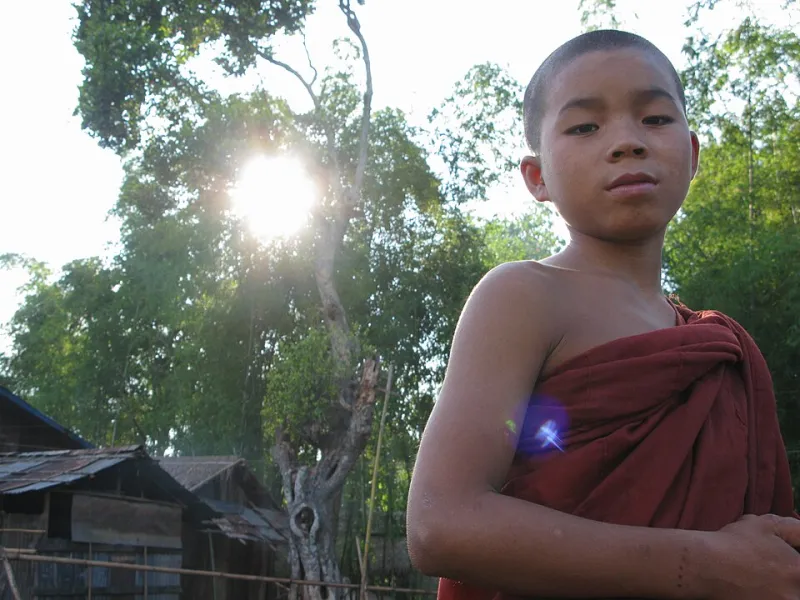
On the first morning, families wake early, cook, and carry food, flowers, and jasmine-scented water to the temple. Monks walk the lanes collecting alms. This is the part worth setting an alarm for.
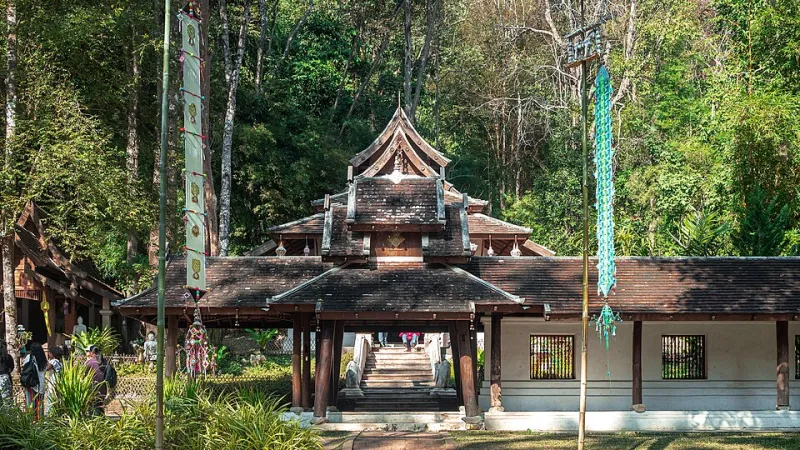
Wat Phra Singh and Wat Chedi Luang get crowded later, but before eight they are calm, and the merit-making is genuine rather than staged. Dress to enter: shoulders and knees covered, shoes off at the door, no pointing your feet at a Buddha image, and if you are a woman, hand anything you are giving a monk to a male companion or place it in his bowl rather than into his hands.
The other northern tradition worth knowing is building sand pagodas, or ku sai. People carry sand back into temple grounds and shape it into small stupas, a way of returning what was tracked away over the year. The riverside temples in Wat Ket are a good place to see it without a crowd.
The Bathing Ritual That Isn't a Water Fight
At the temple you will see small bowls of floating jasmine, and people gently pouring water over Buddha images. That is song nam phra. The other one is rod nam dam hua, water poured over the hands of parents and elders while asking for a blessing. If a family invites you into it, say yes. It takes thirty seconds and it is the most Thai thing you will do all week. Do not, under any circumstances, respond by throwing water.
Afternoon: Food, Family, and the Empty City
Here is a practical detail nobody mentions. A lot of Chiang Mai residents leave town for Songkran to visit family in other provinces. Shops close, favorite restaurants shut for a week, and whole blocks get quiet. Meanwhile the city fills with visitors from Bangkok and abroad.
Plan for that. The khao soi place you love may be dark. What you will find instead is a lot of gaeng om, laab, sticky rice, and grilled chicken, and in April, khao chae, rice soaked in jasmine water and eaten with chilled sides, a hot-season dish that exists precisely because April is brutal. Eating it in 100-degree heat is one of the better arguments for visiting this month.
Etiquette for the Dry, and the Damp
If you do wander into the splash zone, you are fair game. The rule here is simple: if you are on the street during the water hours, you are consenting. Carry your passport in a zip bag or leave it at the hotel. Assume your phone is at risk.
A few things are not acceptable anywhere. Do not splash monks. Do not splash elderly people, babies, or anyone on a motorbike. Anyone visibly carrying electronics or a phone held aloft gets a pass. The white powder some people smear on strangers is technically tradition and broadly disliked by locals, so skip it. And ice water is an escalation, not a greeting, even if the truck next to you thinks otherwise.
If someone does get you, laugh, wipe your eyes, and keep walking. Getting annoyed is the only real faux pas.
What to Pack and How to Plan
April in Chiang Mai runs to 100 degrees Fahrenheit, so light clothes you would not mind ruining, a dry bag, and a refillable water bottle cover most of it. Temples still require covered shoulders, so carry a light overshirt. Book your room away from the moat if you want to sleep, and expect to walk or take the red trucks rather than drive anything with two wheels.
And if you spend the whole holiday dry, waking early, eating well, and pouring water over an old woman's hands while she wishes you a good year, nobody here will think less of you. You will have done the holiday properly. The buckets are optional.