The Gentle Art of the Deal: How to Bargain in Chiang Mai Without Cringing at Yourself
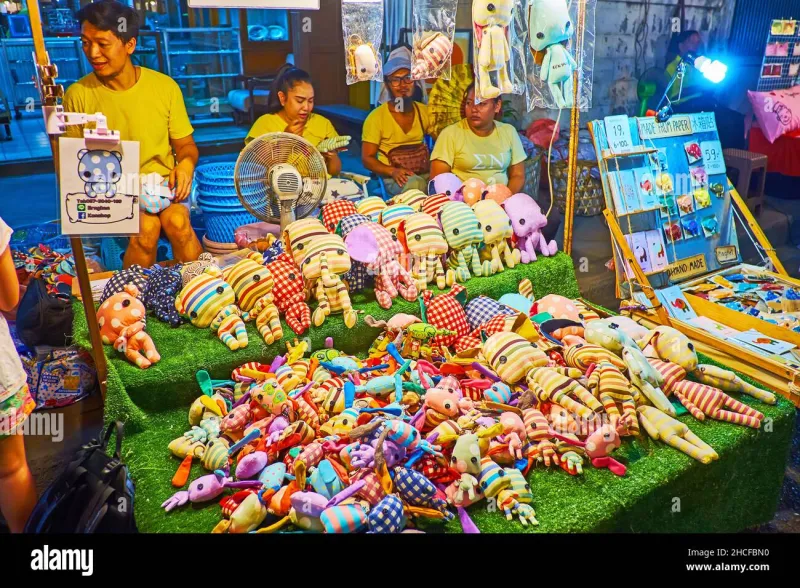
Photo: Chiang Mai Thailand craft market stall vendor handmade textiles, via c8.alamy.com
My first week in Chiang Mai, I paid 400 baht for a cotton scarf that I later saw, two stalls down, for 180. I wasn't scammed. I just didn't know the rules of the game — and worse, I didn't know it was a game, one played with smiles and soft voices rather than hardball tactics.
If you're an American heading to the Rose City, chances are the idea of haggling makes you vaguely sweaty. We don't really do it back home. The price is the price, the tag is the tag, and negotiating feels somewhere between rude and embarrassing. But in Chiang Mai's markets, the opposite is true: a flat refusal to engage can actually come off as standoffish. Bargaining, done right, is a form of friendliness.
Here's what I've learned after several seasons of market mornings, workshop visits, and more ceramic bowls than my kitchen needs.
Start With 'Jai' — The Heart of the Transaction
There's a Thai word you'll hear woven into daily conversation: jai, meaning heart. It shows up everywhere — jai yen (cool heart), jai dee (good heart). And it's the key to understanding how negotiation works here.
A transaction in Thailand isn't a confrontation between buyer and seller. It's a relationship, however brief, and the goal is for both people to walk away feeling okay. If you hammer a vendor down to a price where she loses money, you've won the baht and lost the jai. If you overpay wildly out of awkwardness, you've also skewed the exchange. The sweet spot is a number that feels fair to both of you — reached pleasantly, with no one's face lost.
That word, face, matters. Raising your voice, acting offended, or publicly making someone feel small is a serious social misstep here. You'll notice Thai shoppers bargaining with what looks like laughter. That's not naivety — that's the correct technique.
The Practical Playbook
Okay, tactics. Here's the honest math of it.
Know when prices are fixed. In convenience stores, malls, coffee shops, and most sit-down restaurants, prices don't move. Don't try. In open-air markets, craft stalls, and independent workshops, negotiation is expected.
The first-price rule. Ask the price, then counter at roughly 60–70% of it for handicrafts. Textiles and wood carvings often have 20–40% of wiggle room. If the vendor agrees instantly to your counter, you probably could have gone lower — but honestly, if you're happy, let it go. This isn't a sport.
Buy more, ask more. The magic phrase in any market is a bundle deal. Three scarves, two bowls, a set of coasters — the price per item drops fast. Vendors respect a buyer with a plan.
Walk away gently. The classic move works here, but do it with a smile and a mai pen rai (no worries). Often you'll get called back. Sometimes you won't — and that's the real market price talking.
Never bargain over pennies. Arguing over 10 baht (about 30 cents) is genuinely poor form. If a price is close to fair, pay it. You're on vacation; the vendor is feeding her family.
When Not to Haggle at All
Here's the part most guidebooks skip: some of the best shopping in Chiang Mai involves zero negotiation, because the price is already honest.
At cooperative workshops and artisan studios — where you can watch a weaver at her loom or a carver shaping teak — the asking price usually reflects real labor. These are the moments where paying full price is the ethical move. A hand-woven textile can take days. Bargaining it down to a souvenir price erases the person who made it.
A good rule: if you've watched something being made by hand, pay what's asked, or ask about the process instead of the discount. You'll get a better story than you would a better deal.
A Mini-Guide to Chiang Mai's Crafts — and Where to Find Them
Celadon ceramics — that distinctive jade-green glaze with a crackled finish — come from kilns mostly on the road toward San Kamphaeng and in the Bo Sang area east of the city. Small studios welcome visitors, and buying at the workshop costs a fraction of boutique prices.
Hand-woven textiles are the specialty of villages around San Kamphaeng and, for cotton, areas north of the city. Look for the slight irregularities of a loom-woven piece — machine fabric is too perfect. Natural dyes (indigo, lacquer, jackfruit wood) are the marks of the real thing.
Woodcarving centers around Hang Dong, south of the city, where teak workshops turn out everything from elephant figurines to full carved panels. Shipping home is easier than you'd think; most workshops can arrange it.
Umbrellas and paper crafts come from Bo Sang, the famous umbrella village, where hand-painted pieces make genuinely great gifts.
For markets themselves: Saturday's Wualai Walking Street and Sunday's Walking Street on Ratchadamnoen are the classics, but Warorot Market is where locals actually shop, and the prices show it.
The Point of It All
Slow travel, to me, means the market isn't a checkpoint — it's the destination. Learn three words of Thai (sawasdee, khun, mai pen rai), smile like you mean it, and treat every negotiation as a tiny friendship rather than a duel.
Do that, and the scarf you buy won't just be a souvenir. It'll come with a conversation attached — and that's the part you'll actually remember.