Nobody Told Me Chiang Mai Has a Second Season: A Case for Visiting When the Crowds Don't
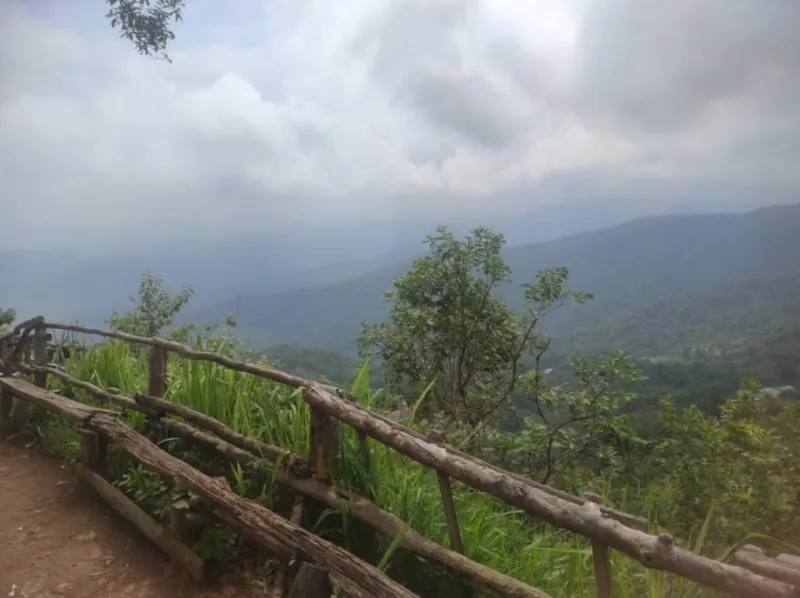
Photo: Kengkyi, CC BY-SA 4.0, via Wikimedia Commons
Let me save you some time: everyone you know who's been to Chiang Mai went between November and February. The digital nomad crowd, the backpackers, the snowbirds fleeing Minneapolis — they all read the same articles about "cool season" and "burning season" and they all booked the same flights. And they all paid high-season prices to stand in line at Wat Phra That Doi Suthep.
I went in August. I'm here to make the case for the other Chiang Mai.
What the Rainy Season Actually Looks Like
First, a correction to the mental image. The Thai green season (roughly June through October) is not forty days of nonstop monsoon. It's mostly gorgeous mornings, humid blue afternoons that build into a dramatic storm around 3 or 4 p.m., and then clear, cool evenings with everything washed clean and smelling like jasmine.
The rain comes in shows, not seasons. You plan your day around it the way people in Florida plan around afternoon thunderstorms — mornings out, afternoons flexible, evenings back on the terrace. After a week, you stop checking the forecast and just develop a feel for it.
The Math Will Convince You Before the Poetry Does
Chiang Mai is already one of the most affordable cities in Southeast Asia, but the green season drops it into almost comical territory:
- Monthly apartments that run $500–700 in February regularly drop to $300–400 in August, often negotiable if you ask for a multi-month rate.
- Guesthouses and boutique hotels discount 30–50%, and the places that are fully booked in January will upgrade you just for showing up.
- Flights from the US West Coast can run $200–400 cheaper than peak winter fares.
- Cafes and coworking spaces are half empty, which means the good seats by the window are actually available.
If you're a remote worker staying a month or more, the savings can cover a meaningful chunk of your flight. Nobody's talking about this enough.
The Temples Belong to You
Here's the part that changed how I think about the city. In February, the popular temples — Doi Suthep, Wat Chedi Luang, Wat Phra Singh — operate at something close to theme-park capacity. In August, I had Wat Chedi Luang's courtyard nearly to myself on a Tuesday morning, listening to the rain come off the tin roofs while a monk swept water off the stone.
The countryside hits differently too. The hills around Mae Rim and the road out to Doi Inthanon are brown and dusty in April and a saturated, almost unreal green in August. Rice paddies that look like dirt lots in dry season turn into mirrors full of water and reflections. Photographers pay a lot of money to chase light like this; the green season just hands it out.
A Week in the Rain: A Loose Itinerary
- Days 1–2, the old city. Temple mornings before the rain, long cafe afternoons. This is when the cafe-hopping crowd's whole lifestyle makes sense — you're not hiding from the rain, you're participating in it.
- Day 3, Doi Suthep. Go early, take a songthaew up the mountain, and time your visit so the clouds are moving through. Mist plus gold chedi plus zero tour buses.
- Day 4, cooking class or market morning. Rainy season is peak growing season, so farm markets and herb gardens are at their best.
- Day 5, Mae Rim waterfalls. This is the secret weapon. The waterfalls around Chiang Mai are dramatically fuller in the wet months. Mae Ya and Wachirathan are a different animal in August.
- Days 6–7, nothing. Pick a cafe with a covered terrace, a book, and a view of the storm roll in. This is the actual point of the trip.
Packing for the Green Season (From Someone Who Didn't)
I packed wrong, so learn from me:
- A compact rain shell, not a giant jacket. It's warm rain; you want coverage, not insulation.
- Quick-dry everything. Cotton and humidity are a bad marriage.
- Waterproof sandals or shoes you don't mind soaking. The streets flood ankle-deep in a good storm.
- A dry bag or ziplocks for electronics, especially if you're riding a scooter.
- DEET. Mosquitoes love the wet months more than you will.
- One warm layer for the mountains — Doi Inthanon gets genuinely cold.
The Honest Version of a Tourist City
There's something I can't quite quantify about seeing a place during its quiet months. Chiang Mai's tourist economy runs on winter; in August, the city is just itself. Vendors have time to talk. Cafe owners remember your order by day two. You're not a tourist being processed — you're a guest who showed up in the off-season, and people treat you accordingly.
Is there a trade-off? Sure. Some treks are muddier, the humidity is real, and you'll get caught in the rain at least once without an umbrella, guaranteed. But you'll pay half as much, share every temple with a handful of people instead of a hundred, and watch storms roll over the mountains from a rooftop with a cold drink.
November through February is when everyone goes. The green season is when Chiang Mai is worth knowing.