Six A.M. Is the Best Table in Chiang Mai: A Breakfast Crawl Through the Wet Markets
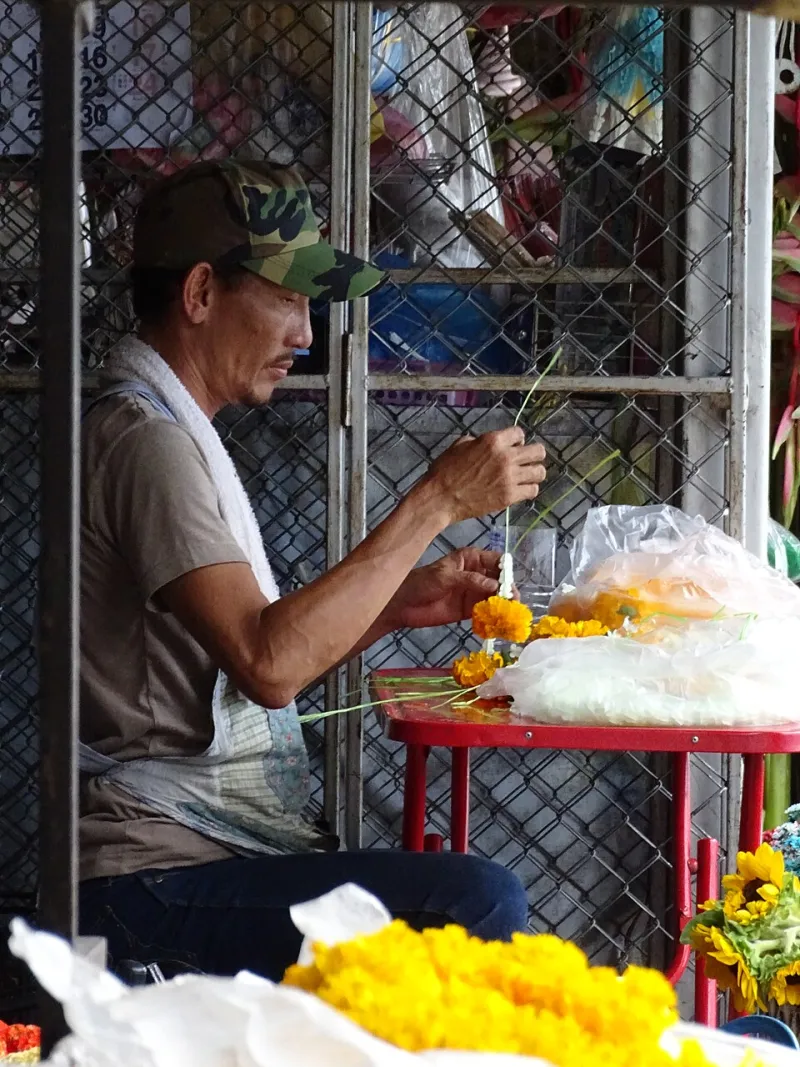
Photo: Adam Jones from Kelowna, BC, Canada, CC BY-SA 2.0, via Wikimedia Commons
There's a version of Chiang Mai that starts around 9 AM: iced lattes, laptop screens, the gentle hum of the Old City waking up. And then there's the other version — the one that starts at 6 AM sharp, when the wet markets are already in full roar and the best breakfast of your life costs less than a gas station coffee back home.
If you're traveling slowly — really slowly — the markets are where you'll find the city before it puts on its face for tourists. Here's how to do a full morning like a local, wallet barely dented.
Start at Warorot (Kad Luang), 6:00 AM
Warorot Market, on the eastern edge of the Old City near the Ping River, is Chiang Mai's granddaddy of markets. It's not cute. That's the point. It's where locals shop for dinner, and by 6 AM the produce stalls are stacked like small mountains and the food vendors are already mid-rush.
Head to the cooked-food section and look for khao kha muu (braised pork leg over rice) or, if you want the true morning classic, khao tom — a brothy rice porridge that Thais treat the way Americans treat chicken soup. Add a Thai iced tea, thick and orange and aggressively sweet, for about 15 baht.
Budget so far: roughly 60–80 baht.
Vendor Etiquette: The Short Version
A few things that make you a welcome guest instead of a nuisance:
- Don't touch the produce. Point and let the vendor bag it. This is a hard habit for Americans trained at farmers markets.
- Have small bills. Vendors don't want your 1,000-baht note at 6 AM.
- Wai or nod when appropriate — a smile and a polite khop khun krap/kha (thank you) goes a long way.
- Don't haggle over cooked food. It's already cheap. Haggling over a 30-baht bowl of noodles reads as rude, not savvy.
- Eat where the crowd is. Long line of locals at a stall with no English signage? That's your stall.
Second Stop: Chang Phuak Market, 7:30 AM
North of the Old City, Chang Phuak is smaller, grittier, and famous for one thing: the legendary braised pork leg stall (look for the woman in the cowboy hat — yes, really). Even at breakfast hour, the meat is falling apart and drenched in a five-spice gravy over rice with a pickled green on the side.
Grab a seat at the shared plastic tables, order a fresh-squeezed orange juice (about 25 baht, pressed while you watch), and just sit. Nobody's rushing you. That's the whole appeal.
Running total: still under 150 baht.
Finish at Ton Payom, 8:30 AM
Ton Payom Market, near Chiang Mai University on the west side, skews younger — students, professors, monks on their morning rounds. It's the easiest market for first-timers and the best place to end the crawl.
Order kai jiaw muu sub (a fluffy omelet with minced pork) or a bag of patongo — Thai-style fried dough that's basically a savory donut's cousin. Pair it with a fresh soy milk, served warm, for pennies.
Grand total for the morning: 250–300 baht. That's roughly $8–9 USD.
Why You Should Cancel the Hotel Breakfast
Here's the thing about the 400-baht hotel buffet: it's fine. It's also the single most expensive way to eat in Chiang Mai and the least memorable. The eggs are the same eggs you'd get in a Sacramento Marriott.
The markets, meanwhile, give you three things a buffet never will: food that's actually regional (Northern Thai cooking is its own thing — try the sai ua sausage while you're at it), vendors who've been running the same stall for decades, and a front-row seat to how the city actually lives.
Slow travel isn't just about staying longer. It's about noticing more. And nothing makes you notice Chiang Mai like standing in a 6 AM crowd, holding a bag of fresh patongo, watching a city that doesn't perform for anyone before 9.
Set an alarm. It's worth it.